Tunisia
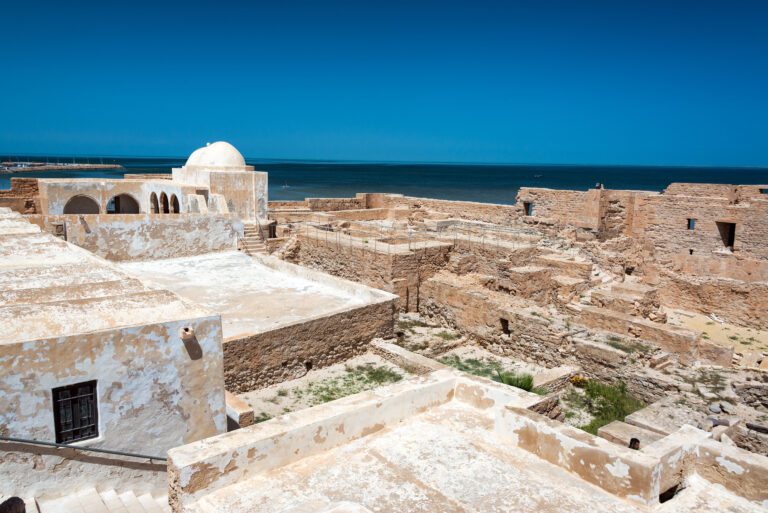
Tunisia’s history stretches back to ancient Carthage, a major center of Mediterranean civilization.
Historical Overview
Tunisia’s history stretches back to ancient Carthage, a major center of Mediterranean civilization. Over the centuries, it was shaped by Roman, Byzantine, Arab-Islamic, Ottoman, and French rule. Tunisia also holds a significant place in Christian history: Carthage was home to influential church fathers such as Tertullian and Cyprian, as well as martyrs like Perpetua and Felicity. The Council of Carthage (A.D. 397) confirmed the New Testament canon, marking Tunisia as a foundational land for early Christianity. Although the region later became predominantly Muslim after the Arab conquests, this rich Christian heritage remains part of its story. Modern Tunisia gained independence in 1956 and sparked the Arab Spring in 2011, briefly opening the door to political and social change.
Historical Overview
Tunisia’s history stretches back to ancient Carthage, a major center of Mediterranean civilization. Over the centuries, it was shaped by Roman, Byzantine, Arab-Islamic, Ottoman, and French rule. Tunisia also holds a significant place in Christian history: Carthage was home to influential church fathers such as Tertullian and Cyprian, as well as martyrs like Perpetua and Felicity. The Council of Carthage (A.D. 397) confirmed the New Testament canon, marking Tunisia as a foundational land for early Christianity. Although the region later became predominantly Muslim after the Arab conquests, this rich Christian heritage remains part of its story. Modern Tunisia gained independence in 1956 and sparked the Arab Spring in 2011, briefly opening the door to political and social change.
Current Status
Today, Tunisia faces economic struggle, high unemployment, and renewed political restrictions, especially as power has become increasingly centralized since 2021. Christians remain a very small minority, face strong family pressure, social exclusion, and limits on openly practicing or sharing their faith. Access to Bibles and Christian leadership is limited. Yet despite these challenges, a faithful remnant continues to follow Christ. Small churches endure, Christian media is growing, and seeds of hope remain rooted in a land that once helped shape the global Church and may yet see spiritual renewal again.
Testimonials
God is working through us to reach seekers’ hearts and transform their lives. All the names of the shared testimonies have been changed, concealing their identity to protect them.
Prayer
“When you pray, you join a global movement that strengthens underground churches, encourages new believers, and opens doors in unreached nations.