Sudan

Sudan is a land of ancient civilizations and deep spiritual heritage, stretching back to the Kingdom of Kush and the early Nubian Christian kingdoms of the 6th century.

Insights

Capital
Khartoum
Total Pop
52,100,000
Male %
49.60%
Female %
50.40%
Age 18–34 %
~28.7%

Insights

Capital
Khartoum
Total Pop
52,100,000
Male %
49.60%
Female %
50.40%
Age 18–34 %
~28.7%

Insights

Primary Religion
Islam (Sunni)
Religion Division %
Muslim 91.7 %, Christian 5 %
Primary Language
Arabic / English
Social Media Users
6,060,000
Persecution Ranking
4
Overall Literacy %
72%

Historical Overview

Sudan is a land of ancient civilizations and deep spiritual heritage, stretching back to the Kingdom of Kush and the early Nubian Christian kingdoms of the 6th century. For centuries, Christianity took root along the Nile, sustained by local believers, Coptic leadership, and later Catholic and Anglican missions. Even as Islamic expansion, colonial rule, and political change reshaped the nation, the Church endured and became part of the fabric of many Sudanese communities. Following independence in 1956, growing ethnic, religious, and regional divisions led to prolonged civil wars and, ultimately, the separation of South Sudan in 2011. Rather than bringing peace, division gave way to renewed instability, repeated conflict, and deep national wounds that continue to shape Sudan’s story.

Insights

Primary Religion
Islam (Sunni)
Religion Division %
Muslim 91.7 %, Christian 5 %
Primary Language
Arabic / English
Social Media Users
6,060,000
Persecution Ranking
4
Overall Literacy %
72%

Historical Overview

Sudan is a land of ancient civilizations and deep spiritual heritage, stretching back to the Kingdom of Kush and the early Nubian Christian kingdoms of the 6th century. For centuries, Christianity took root along the Nile, sustained by local believers, Coptic leadership, and later Catholic and Anglican missions. Even as Islamic expansion, colonial rule, and political change reshaped the nation, the Church endured and became part of the fabric of many Sudanese communities. Following independence in 1956, growing ethnic, religious, and regional divisions led to prolonged civil wars and, ultimately, the separation of South Sudan in 2011. Rather than bringing peace, division gave way to renewed instability, repeated conflict, and deep national wounds that continue to shape Sudan’s story.

Current Status

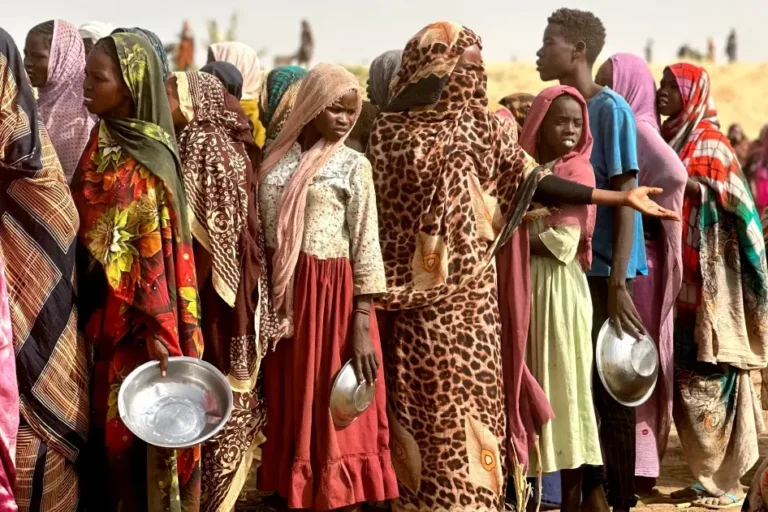
Today, Sudan is marked by violent conflict, economic collapse, mass displacement, and humanitarian crisis, intensified by the ongoing power struggle between rival military forces. Millions have been uprooted, basic services have collapsed, and Sudan now faces the world’s largest internal displacement crisis. Christians—who form a small minority—live under intense pressure, especially converts and believers in regions like the Nuba Mountains, where persecution is most severe. Churches are attacked, leaders detained, and many believers are forced to worship in secret with limited access to Bibles and Christian support. Yet Sudan’s story is not only one of suffering. Faith continues to endure. Amid fear and loss, Sudanese Christians cling to Christ, seeking unity beyond ethnic and political lines and investing in the next generation through discipleship and prayer. In a land torn by violence, the quiet perseverance of believers stands as a powerful testimony that the Church is built on Christ alone—and in Him, hope has not been extinguished.   2. Current Status – South Sudan 4 Today, South Sudan faces serious political instability that threatens to reignite civil conflict, highlighted by events such as the house arrest and court trial of former Vice President Riek Machar. The nation struggles with a nearly bankrupt government, limited public services, and the pressures of an ongoing refugee influx from Sudan, all of which strain already fragile communities. The South Sudanese Church, while freer than its northern neighbor, remains under threat from these uncertainties, with the potential for Christianity to lose influence among future generations if believers do not embrace biblical renewal, unity, and discipleship. In this context, South Sudanese Christians are called to embody love, forgiveness, reconciliation, integrity, and endurance in Christ, anchoring their faith on Him rather than on tribal or political loyalties, and working toward regional and denominational unity as they strengthen and establish Christian communities throughout the nation.


2025

2,299 Unique seekers
172 Gospel Presented
20 Professions of Faith
18 New Disciples

2026

878 Unique seekers
51 Gospel Presented
9 Professions of Faith
7 New Disciples

Testimonials

God is working through us to reach seekers’ hearts and transform their lives. All the names of the shared testimonies have been changed, concealing their identity to protect them.

Prayer

“When you pray, you join a global movement that strengthens underground churches, encourages new believers, and opens doors in unreached nations”.

Resources

Population Source, Age Source and Social Media Source Digital 2026: Sudan — DataReportal – Global Digital Insights

Religion/Language Source Sudan - Operation World

Persecution Ranking Source (Rank #1 indicates the most severe level, while Rank #50 represents the lowest within the Top 50.) Sudan  · Serving Persecuted Christians Worldwide

Historical overview and Current status Sudan’s Ongoing Crisis - Window International Network (WIN), Sudan - Prayercast , Voice of the Martyrs – Praying for Persecuted Christians in Sudan

×

Submit a Prayer